
Robotic-assisted joint replacement surgery
Option A
Robotic-assisted joint replacement surgery
Option Information
Select Reservation Date
Up to 3
Hospital Location
584 Haeun-daero, Haeundae, Busan, South Korea
This is a robotic joint replacement surgery performed based on the extensive clinical experience of an orthopedic specialist who is a former university professor. Using 3D imaging, the patient's joint condition is precisely analyzed in advance, and the robot is used to minimize the margin of error for accurate bone resection. By reducing unnecessary damage to surrounding tissues and inserting the artificial joint at an angle customized to the individual patient, we aim for more stable and positive surgical outcomes.
Treatment information is for reference only and may vary depending on individual conditions. For accurate details, please consult with the facility.
Recommended for
- Individuals experiencing severe knee or hip pain due to end-stage degenerative arthritis • Individuals whose symptoms have not improved despite consistent conservative treatments such as medication or injections • Individuals who have difficulty walking in daily life due to severe leg bowing or joint deformity • Individuals who wish to reduce the burden of post-operative pain and recovery through precise surgery with minimized error margins
Procedure Benefits
- Precise pre-operative planning: By identifying bone shape and joint condition through 3D imaging, a customized surgical plan optimized for the individual patient can be established. • Minimization of surrounding tissue damage: The precise cutting of the robotic arm reduces damage to healthy bone and ligaments, helping to decrease post-operative bleeding and pain. • Relatively fast recovery: Due to minimal tissue damage, the post-operative recovery speed is relatively fast, allowing for early ambulation and the start of rehabilitation. • Improved stability: By detecting minute angles and errors that are difficult to identify with the naked eye, it contributes to extending the lifespan of the artificial joint and lowering the risk of post-operative complications such as dislocation.
Risks and Notes
The feasibility of surgery and specific treatment methods may vary depending on the patient's symptoms, test results, and overall health condition; therefore, it is essential to make a decision regarding surgery through an in-depth examination and consultation with an orthopedic specialist. Additionally, for a successful recovery, consistent rehabilitation exercises following the medical team's guidance are mandatory after discharge. (Complications such as postoperative bleeding, infection, thrombosis, and joint stiffness may occur.)
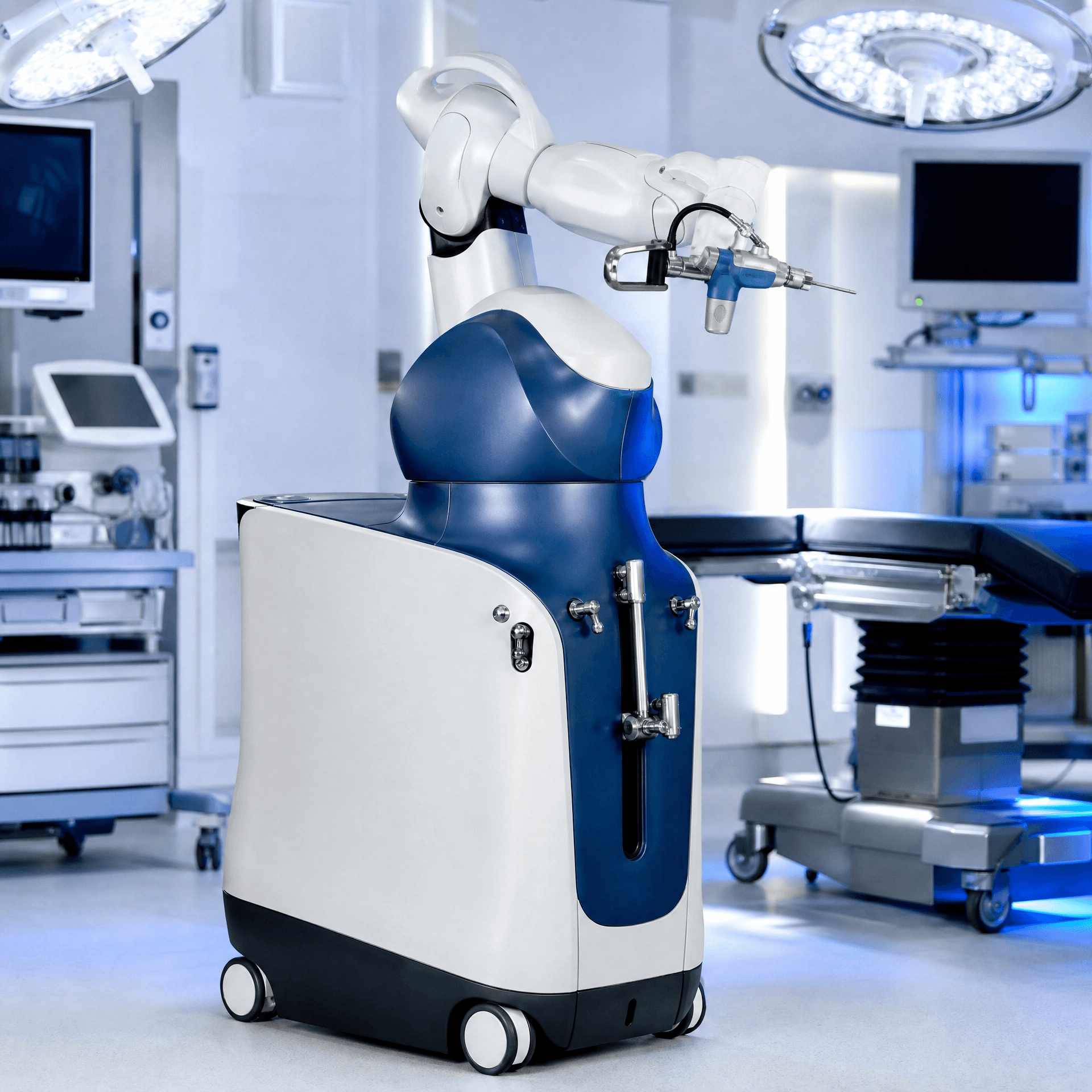
[Introduction of Verified Precision Robotic Joint Replacement Surgery] Our hospital utilizes the 'Mako SmartRobotics' surgical robot system to ensure safe and precise surgeries for our patients. Through the collaboration of robot equipment verified by numerous clinical studies and our experienced orthopedic medical team, we provide consistent and precise joint replacement surgery tailored to each patient's individual anatomical structure.

From 3D simulation to precision cutting, the 4-step systematic robotic surgery process. 1. 3D Volumetric Analysis: Before surgery, the patient's joint area is scanned via CT to create a 3D volumetric image. 2. Virtual Surgery (Pre-operative Planning): Based on the 3D image, a simulation is conducted by meticulously calculating the bone resection range, as well as the size and insertion angle of the artificial joint. 3. Precision Robotic Cutting: After registering the data in the operating room, the surgeon directly controls the robotic arm to precisely cut only the planned areas with reduced margin of error. 4. Artificial Joint Insertion: After carefully checking the balance of the patient's ligaments and joints, the 1:1 customized artificial joint is firmly inserted to complete the surgery.

'Haptic Zone' system to prevent damage to normal tissue One of the major advantages of robotic surgery is the safety mechanism that automatically stops the robot if it moves outside the pre-planned surgical area. By cutting only the necessary bone, it reduces damage to surrounding soft tissues such as healthy muscles, blood vessels, and ligaments, which contributes to reduced postoperative pain and relatively faster recovery.

What are the differences between conventional artificial joint surgery and robotic surgery? While conventional surgery relies heavily on 2D X-rays and the naked eye and experience of the medical staff, robotic surgery derives precise surgical angles based on 3D computer stereoscopic imaging. Because the insertion position of the artificial joint is accurately identified in advance and the robot's sensors correct for minute tremors and errors, more precise and stable surgical results can be expected.
Q&A
Select Option
Robotic-assisted joint replacement surgery