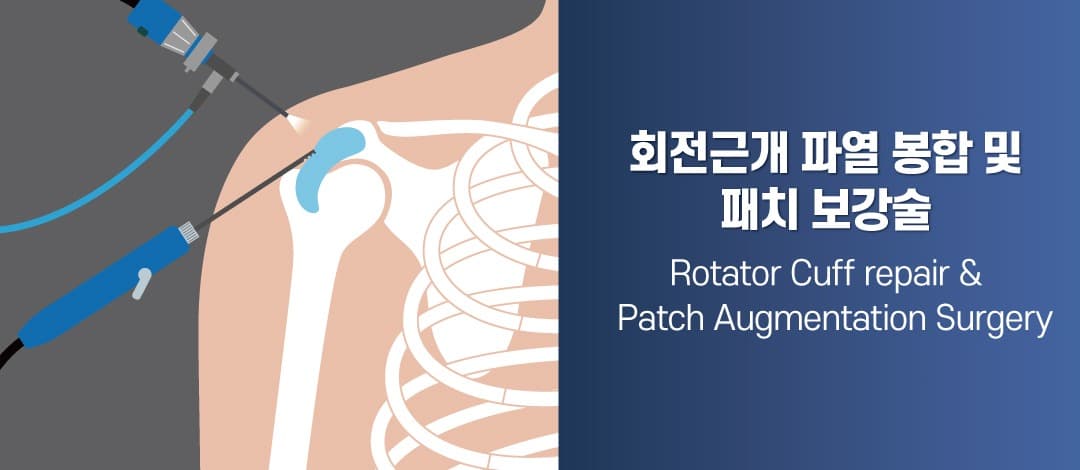
Shoulder Rotator cuff tear repair and patch augmentation
Option A
Shoulder Rotator cuff tear surgery/patch augmentation
Option Information
Select Reservation Date
Up to 3
Hospital Location
996 Dongil-ro, Nowon-gu, Seoul, South Korea
Patch augmentation significantly reduces the risk of rotator cuff re-tear after surgery. The shoulder rotator cuff consists of muscles and tendons that stabilize the shoulder joint, and it can tear due to trauma or degenerative changes. In cases where the tear is severe or extensive, surgical treatment is required. However, the risk of re-tear increases depending on the patient's age at the time of surgery and the condition of the tendons, requiring caution. Gangbuk Yonsei Hospital provides robust fixation for Rotator cuff tear using multi-row and bridge-type double-row suture techniques, and reinforces it with patch augmentation to significantly lower the risk of re-tear.
Treatment information is for reference only and may vary depending on individual conditions. For accurate details, please consult with the facility.
Recommended for
- I cannot lift my arm at all on my own, which makes my daily life difficult.
- Lifting objects with your arms away from your torso causes shoulder weakness and pain.
- I am losing sleep due to severe shoulder pain at night.
Procedure Benefits
- It can significantly reduce the risk of rotator cuff re-tear.
- Because the surgery is performed with minimal incisions using an arthroscope, recovery is fast and there is almost no scarring.
- Even severe tears that would warrant consideration of a shoulder joint replacement can be treated surgically.
Risks and Notes
To ensure proper recovery of the surgical site after discharge, you must wear your brace as instructed. It is common for patients to remove the brace at home, but please continue to wear it even while indoors. When sleeping, keep only the cushion part of the shoulder brace on and sleep with your arm extended. Additionally, you must avoid lifting heavy objects with your arm extended, as this places significant tension on the rotator cuff. Since it can take 6 months to a year for the rotator cuff to heal and fuse to the bone, it is recommended that you avoid strenuous exercise during this period. (Rarely, inflammation or infection may occur after surgery.)
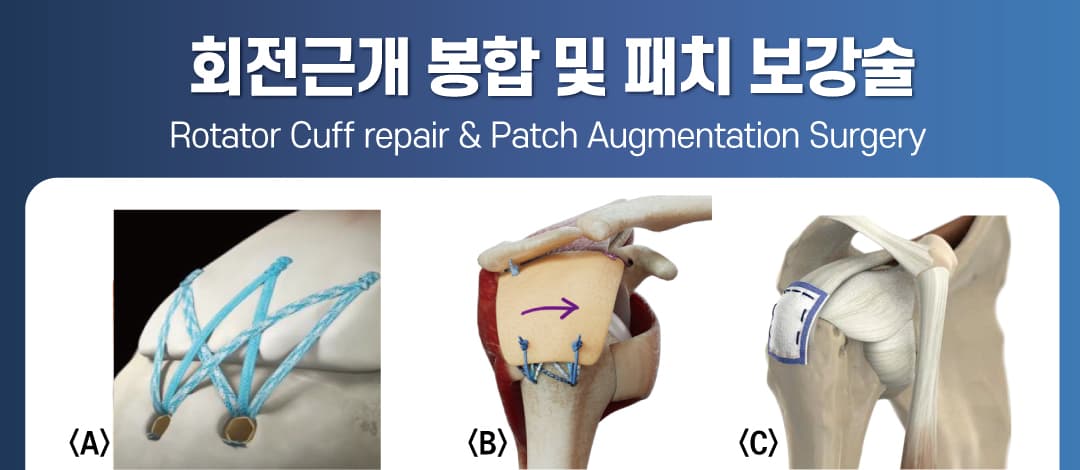
Multiple-row and bridge-type double suture & patch augmentation Multiple-row and bridge-type double suture (Figure <A>) distributes the tension holding the torn rotator cuff tendon across multiple sutures, aiding in stable attachment and regeneration to the greater tuberosity of the humerus where the rotator cuff needs to reattach. Additionally, your own tendon can be reinforced and made stronger using various patches, such as allogeneic dermal tendon (artificial tendon/Figure <B>) or collagen patches (Figure <C>). Because the procedure uses arthroscopy, there is less postoperative pain, faster recovery, and smaller scarring.
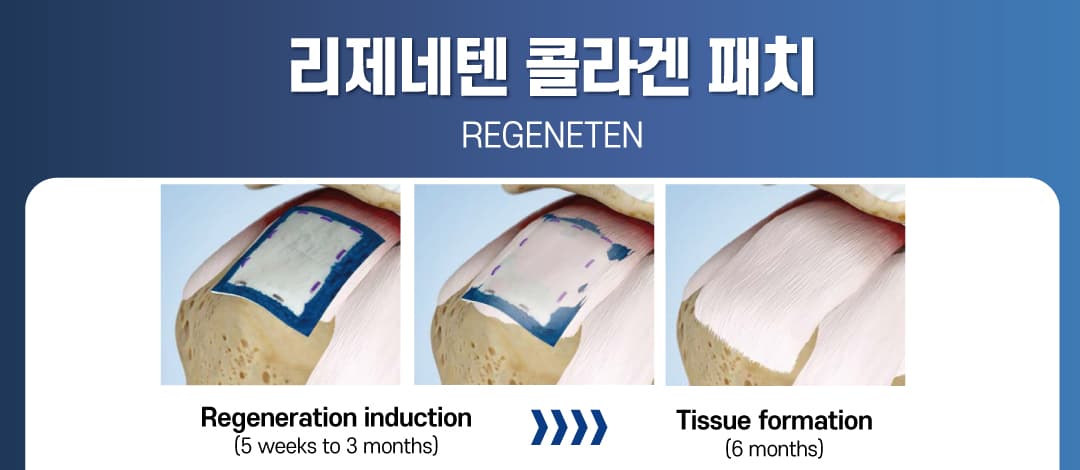
Regeneten Collagen Patch The Regeneten Collagen Patch is a bioinductive collagen implant that is attached to a torn rotator cuff using arthroscopy to induce regeneration and promote rapid recovery. It can be used to reinforce tendons following rotator cuff repair surgery, and depending on the severity of the tear, it can also be used as a standalone procedure.
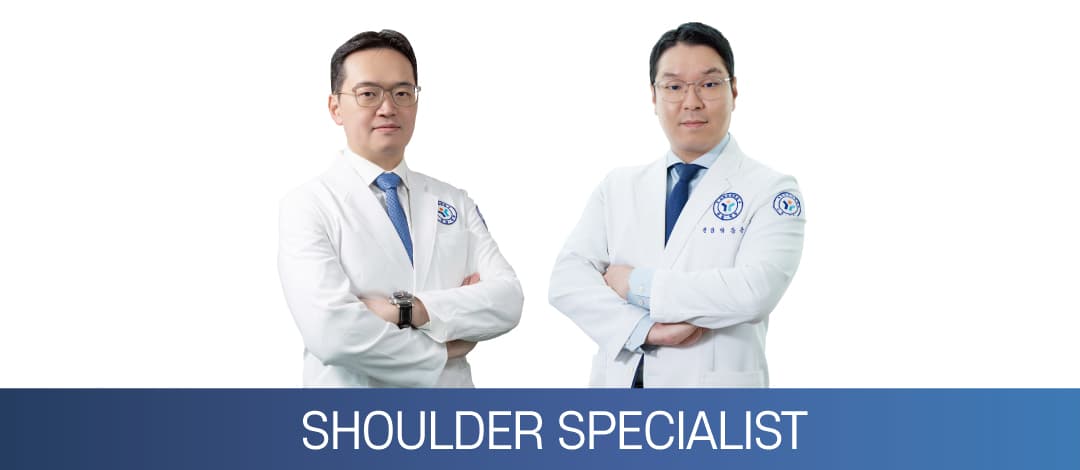
The Shoulder & Upper Extremity Clinic at Gangbuk Yonsei Hospital is staffed by two specialists who focus on the diagnosis and treatment of the shoulder, arm, elbow, hand, and wrist. Utilizing arthroscopy and advanced medical technologies, we provide total care ranging from non-surgical treatments to high-complexity surgical procedures for degenerative shoulder joint diseases, dislocations and fractures, elbow joint diseases and trauma, and sports injuries.
Select Option
Shoulder Rotator cuff tear surgery/patch augmentation